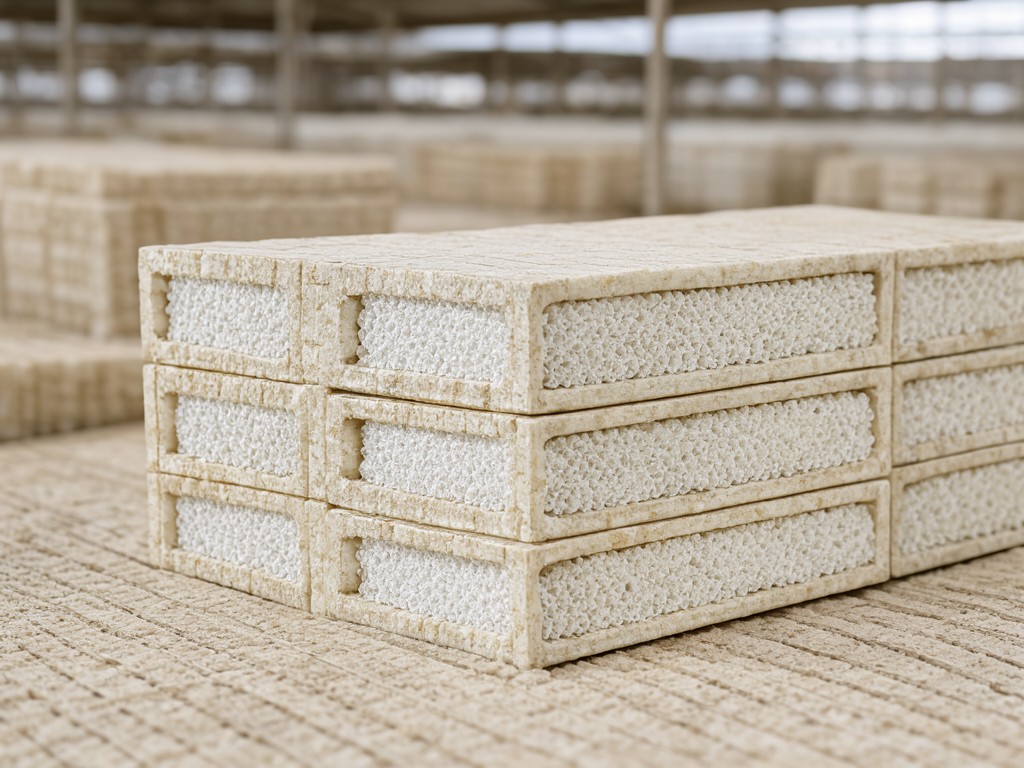
Specifying OEM Insulated Sandwich Panels for Poultry Houses China Factory for Wholesale and OEM Orders
Thermal stability in poultry environments depends on the integrity of the bond between the metal skins and the insulating core. High humidity and ammonia cycles often cause failure in standard adhesives, leading to delamination and structural sagging. Our manufacturing process utilizes continuous polyurethane foam (PUR) or polyisocyanurate (PIR) injection to ensure a monolithic bond, preventing air pockets that compromise thermal resistance over the life of the barn facility.
Scope of Supply
The skin material determines the resistance to chemical cleaning agents and mechanical impact. We provide 0.4mm to 0.7mm galvanized steel sheets with various coating options specifically designed to withstand the corrosive environment typical of poultry waste gases. For high-density operations, a mineral-embossed surface is often recommended to reduce dust buildup and surface abrasion during high-pressure washing cycles.
- Core densities ranging from 38kg/m³ to 42kg/m³ for structural rigidity.
- Panel thicknesses from 50mm to 200mm depending on the regional climate zone requirements.
- Surface treatments including PVDF, polyester, or specialized anti-based coatings for antimicrobial resistance.
- Joint systems featuring tongue-and-groove or interlocking profiles for thermal-bridge elimination.
Measured Performance in Real Use
Thermal efficiency is measured by the heat conductivity (lambda value) across the panel assembly. If the foam density is inconsistent, thermal spots occur at the seams, increasing the energy load on heating or cooling systems. We test every batch to ensure the U-value remains within the specified tolerance, ensuring that the internal temperature remains stable regardless of external temperature fluctuations.
Mechanical strength is evaluated through the span-to-thickness ratio. A panel with low-gauge steel may deflect under the weight of mounted equipment or during wind loads. By adjusting the core density and skin thickness, we can increase the maximum span between supports, reducing the total amount of material required for the barn construction.
Size and Weight Range
| Parameter | Specification Range |
|---|---|
| Panel Thickness | 50mm - 200mm (customizable) |
| Steel Thickness | 0.4mm - 0.7mm |
| Standard Width | 1000mm - 1200mm |
| Maximum Length | Up to 12000mm (shipping dependent) |
Comparing Two Configurations
PUR Core Configuration
Best for standard poultry houses where cost-efficiency is the primary driver. It offers good thermal insulation but has a lower fire rating compared to PIR. Ideal for temperate climate zones.
PIR Core Configuration
Selected for high-performance requirements or regions with strict fire safety codes. The cell structure provides better thermal stability and higher resistance to heat. Higher price point per square meter.
Working as a Partner, Not a Supplier
OEM production requires tight alignment between architectural blueprints and shipping logistics. We work with brand managers to define panel profiles that minimize waste on-site and ensure rapid assembly for local crews. By optimizing the panel lengths to match container dimensions, we reduce the risk of damage during long-distance sea freight from China.
Consistency across batches is maintained through automated monitoring systems on the production line. We track foam expansion rates and pressure in real-time to ensure every panel matches the approved sample. This prevents the common issue of varying structural stiffness across a large-scale construction project.
Consistency Is Held Across Batches
Request a technical data sheet or a quote based on your specific project's thermal load requirements.
Contact our engineering team for OEM specifications


