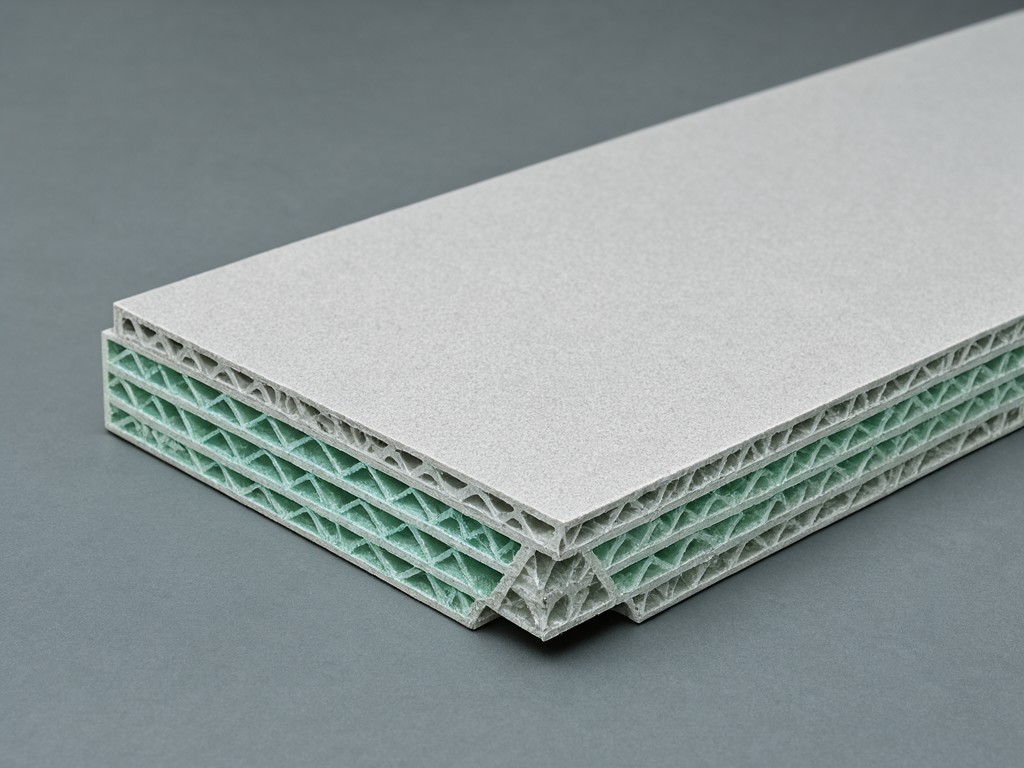
OEM Lightweight Thermal EPS Sandwich Panel Exporter: Specification, Ordering and Quality Notes
Thermal stability in construction assemblies depends on the bond strength between the outer skins and the density of the EPS core. When sourcing for large scale projects, the primary failure mode is not the insulation material itself, but delamination caused by thermal cycling. Our manufacturing process utilizes continuous vacuum extrusion to ensure a uniform cell structure, preventing the air pockets that lead to premature structural fatigue in lower-grade alternatives.
Where Cheaper Alternatives Fall Short
Low-cost sandwich panels often utilize inconsistent adhesive application methods that fail when the panel is subjected to direct UV exposure. This results in uneven thermal expansion across the panel face, leading to warping and failure of cladding systems. We mitigate this by employing a reinforced-polymer adhesive layer that maintains elasticity across temperature gradients ranging from -30°C to +70°C.
- Inconsistent core thickness leads to thermal bridges that compromise the overall energy rating.
- Poorly bonded skins result in moisture ingress, causing internal mold and structural degradation.
- Lack of impact resistance in the EPS foam causes cracking during transport and site handling.
How It Is Built and What Changes
The construction of the panel begins with the selection of the skin material—typically galvanized steel, aluminum, or glass fiber-reinforced composite. The choice of skin dictates the tensile strength of the entire assembly. Once the skins are selected, the EPS core is processed through a precision-forming machine to ensure the bead size remains constant within a ±0.5mm tolerance.
Core Density Selection
High-density EPS provides superior load-bearing capacity for structural walls, while low-density variants minimize weight for non-load bearing insulation layers.
Surface Treatment
Custom coatings such as PVDF or polyester are applied to the skins to prevent corrosion and UV fading in specific architectural environments.
This Product Beats Standard Alternatives
Consistency across batches is maintained through rigorous dimensional checks. If a panel width varies by more than 2mm over a ten-meter run, installation speeds drop and costly labor delays. Our automated cutting systems ensure that every panel in a shipment meets the exact CAD specifications of the approved sample.
| Parameter | Technical Range |
|---|---|
| Panel Total Thickness | 50mm - 300mm |
| Compressive Strength | 150 - 450 kPa (per density) |
| Thermal Conductivity (λ) | 0.032 - 0.038 W/mK |
| Width Tolerance | ±2.0mm |
Consistency Is Held Across Batches
Batch traceability is managed through digital logging of raw material lots per run. We perform periodic pull-off tests to ensure the bond strength exceeds the strength of the EPS foam itself. This ensures that the 1000th panel performs identically to the first prototype under mechanical stress.
Inspection Items and Test Methods
Every shipment undergoes a multi-stage verification process before dispatch. We focus on moisture absorption rates and dimensional stability to ensure the panels do not gain weight during high-humidity transit.
- Pull-off testing to verify adhesive-to-substrate integrity.
- Dimensional verification using laser-guided gauges.
- Ultrasonic testing for core density consistency and voids.
Volume and Lead Time
Lead times are determined by skin material availability and the specific EPS density requirements. Standard profiles are typically producible within a 3-4 week window, while custom OEM architectural profiles may require additional time for tooling and sample approval validation. Contact our technical team for a production quote.
Stock Availability and Planning
We maintain inventory of standard core densities to facilitate rapid reordering for wholesale buyers. For private-label projects, we recommend a rolling forecast to secure raw material pricing and prevent production bottlenecks during peak demand seasons.
Questions Ask Before Ordering
Can the panels be used for cold storage environments?
Yes, we specify flame-retardant additives in the EPS core to meet specific thermal resistance requirements for sub-zero applications.
What is the load rating for a standard panel?
Load rating is calculated based on the span distance and the skin thickness; we provide a structural calculation table for every custom OEM configuration.
Ready to discuss your thermal panel specifications?
Request Technical Datasheet & Quote


