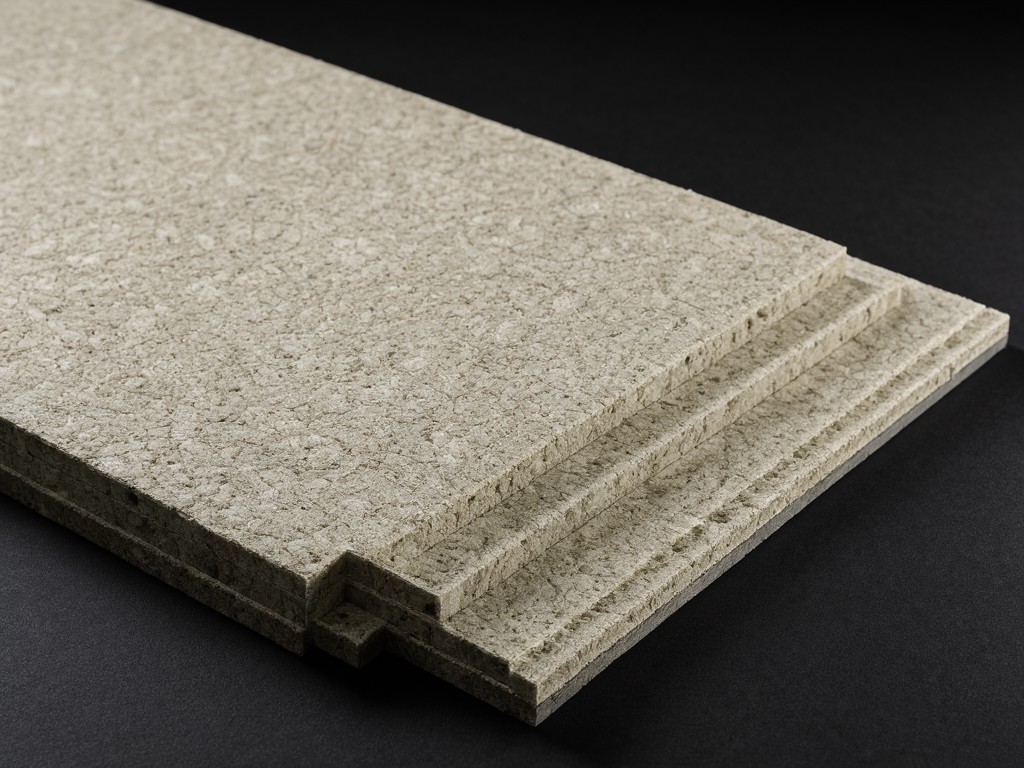
Specifying OEM Non Combustible Rock Wool Composite Panels Manufacturer for Wholesale and Orders
Thermal and acoustic performance depends on the density of the rock wool core and the mechanical integrity of the facing membranes. High-density cores (60kg-120kg/m³) provide better fire resistance but increase the dead load and procurement cost. For large-scale installations, the trade-off lies between achieving a specific R-value and the structural limits of the panel system.
Materials and Construction Trade-offs
The choice of facing material determines the panel's resistance to moisture and impact. Aluminum-faced composites offer high rigidity and vapor but are susceptible to denting if the gauge is too thin. Fiber-reinforced alternatives provide better impact absorption but require specific edge treatments to prevent fiber shedding during transport.
- Lower density cores reduce shipping costs but decrease the acoustic absorption coefficient at mid-frequencies.
- Thicker mineral layers increase thermal resistance but require wider fastening spans to prevent sagging under self-weight.
- Specialized coatings improve UV stability for exterior applications but increase the unit price significantly compared to standard finishes.
What Can Be Customised and What Cannot
Customization focuses on the dimensional tolerances and surface finishes to match architectural or industrial requirements. We can adjust the core thickness in 5mm increments to meet specific thermal-rating targets. However, the non-combustible nature of the rock wool is fixed by the material composition and the manufacturing sintering process.
Variable Parameters
Panel lengths and widths up to 3000mm, core density, custom-printed textures, and edge-cut profiles for mechanical fastening.
Fixed Constraints
Base fire rating limits, mineral wool reaction limits, and maximum tensile strength of the core material cannot be altered without changing product grade.
Requirements by Segment
Distributors prioritize consistent batch dimensions to ensure rapid installation without on-site wastage. Academy or club managers focus on the acoustic damping properties (Noise Reduction Coefficient) and the durability of the surface finish against wear in high-traffic environments.
| Usage Condition | Typical Complaint | Prevention Specification |
|---|---|---|
| High Humidity Zones | Core swelling and mold growth | Hydrophobic mineral wool with >vapor barrier facing |
| Rapid Thermal Cycling | Surface cracking at panel joints | Expansion-coefficient matched skin and core bond |
| Mechanical Impact | Puncture of the composite layer | High-density polymer or high-gauge metal skin skin |
Inspection Items and Test Methods
Batch consistency is maintained through dimensional checks and weight-per-unit verification. We measure thickness variance to within ±0.5mm to ensure fitment in modular systems. Shear strength tests are performed on samples to verify the composite bond does not delaminate under structural stress.
Setup, Use and Replacement
Installation requires rigid sub-frames to prevent panel deflection which stresses the rock wool core. Maintenance involves non-abrasive cleaning to avoid deforming the facing membrane. If a section is mechanically damaged, the modular design allows for individual replacement without compromising the fire barrier integrity of the entire assembly.
Questions Ask Before Ordering
What is the load bearing capacity of a 50mm panel?
Capacity is typically rated at 50-150 kg/m² depending on the support span; these are not designed as structural load-bearing surfaces.
How do lead times vary for custom dimensions?
Standard stock ships in 2 weeks; bespoke sizing requires 4-6 weeks for die tooling and production scheduling.
Request technical datasheets or material samples for your project.
Contact our engineering team for an OEM quote


