Specifying OEM Outdoor Walk In Freezer Roof Sandwich Panels Suppliers for Wholesale Orders
Outdoor refrigeration environments introduce extreme thermal gradients that internal units do not. For outdoor installations, the roof panel must withstand direct solar radiation and snow loads while maintaining a consistent thermal core. The structural bond between the outer skin and the insulation core determines whether the panel remains flat over years of seasonal temperature cycles. If the adhesive bond is insufficient, the thermal expansion of the metal skin against the foam leads to delamination, creating air pockets that compromise the R-value.
Material Selection and Physical Form
The core material is the primary variable in balancing thermal resistance against structural rigidity. While Polyurethane (PUR) is the industry standard for cost-efficiency, Polyisocyanurate (PIR) offers better dimensional stability for outdoor-grade applications where UV and heat exposure are constant. The skin thickness usually ranges from 0.5mm to 0.8mm, with thicker gauges providing better resistance to impact during assembly and maintenance-roof access.
| Parameter | Standard Specification | Performance Metric |
|---|---|---|
| Insulation Core | PIR / PUR Foam | Thermal conductivity (K-value) |
| Skin Material | Galvanized Steel / PVDF | Corrosion resistance (C3-C5) |
| Panel Thickness | 60mm - 150mm | Load capacity (kg/m²) |
| Joint Type | Tongue & Groove | Water-tight rating |
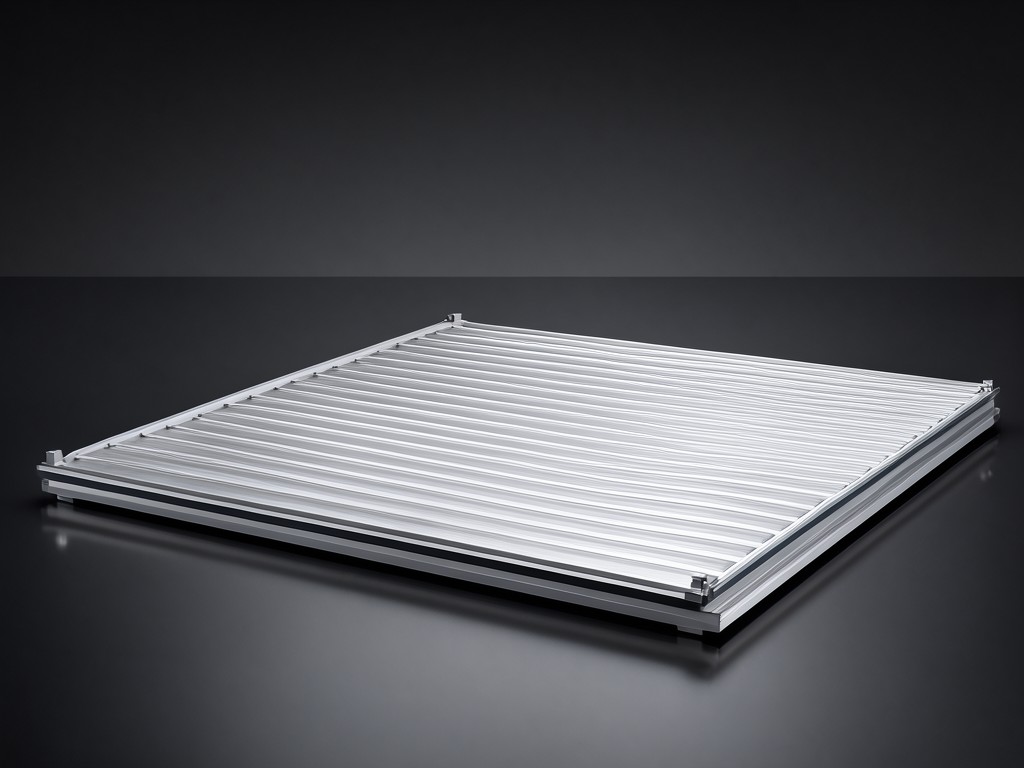
How Is Built and What Changes
Continuous lamination is the standard for ensuring consistency. The metal skins are fed through a forming line where the chemical components are injected between the sheets. The exothermic reaction creates a foam that expands to fill the metal profile, creating a mechanical lock. If the pressure during foaming is inconsistent, the core density varies, leading to structural weak points that fail under the weight of snow or equipment.
- High-pressure molding ensures a uniform cell-cell structure, preventing moisture ingress.
- Profile-clamped joint lines minimize thermal bridging at the panel intersections.
- Pre-coated coil finishes (PVDF or polyester) prevent chalking and fading in high-UV outdoor zones.
Matching the Buyer's Need
Procurement must choose between panel-weight and thermal efficiency. A thinner panel with higher-density foam reduces freight costs but may require more compressor runtime to maintain the internal set point. For outdoor walk-in units in hot climates, the 100mm PIR core is often the baseline to prevent internal condensation and heat gain during peak sunlight hours.
High-Volume Wholesale
Focuses on standard thicknesses (60mm-100mm) and standard galvanized profiles. Optimized for rapid deployment and lowest cost-per-meter.
Custom Branding
Includes custom skin profiles for specific architectural integration and specialized color-matched coatings for retail-facing outdoor freezer units.
What Can Be Customised and Cannot
While the skin finish and joint profile are easily tailored to meet architectural requirements, the core thermal properties of the foam are fixed by the chemistry. You cannot alter the R-value of a specific foam density without changing the thickness. However, we can adjust the panel lengths to minimize site-cut waste, reducing labor hours for the installation team.
Who Uses It and Where Matters
Cold chain logistics manufacturers utilize these panels for modular storage units placed in distribution hubs. In these scenarios, the roof panel is the most vulnerable point to environmental degradation. Using a panel with a UV-resistant coating ensures the structural dimensions remain within tight tolerances, preventing leaks that would damage the freezer's electrical components.
OEM and ODM Structure
Our OEM service allows brands to integrate sandwich panel production directly into their assembly line. This includes technical coordination for joint-alignment to ensure the roof panels interface perfectly with the wall and door systems. We provide the technical data for load-bearing capacities to ensure your final product meets local structural safety codes.
Volume Planning and Lead Time
Lead times for standard configurations typically depend on coil stock availability and foam-grade inventory levels. Custom profiles or specialized coatings add an additional 2-4 week window for tooling and batch approval. Large-scale wholesale orders require early forecasting to ensure consistent batch production across the entire project run.
Request technical data sheets and volume pricing for outdoor freezer roof panels.
Contact our Engineering Team for OEM Specifications


