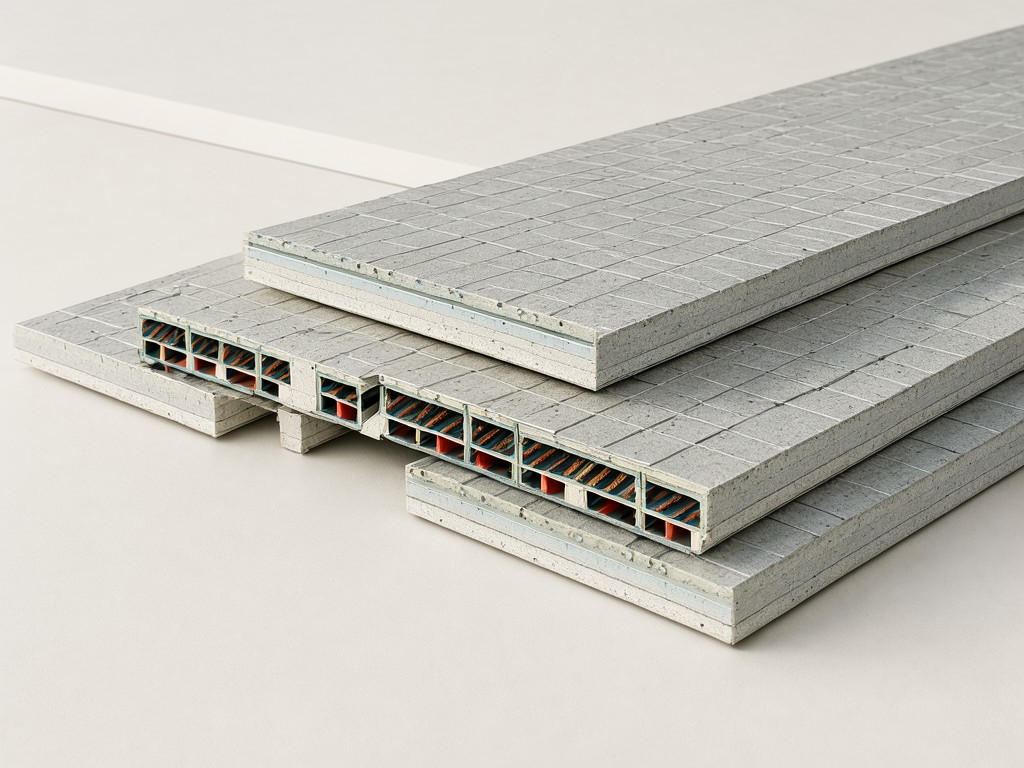
OEM Prefabricated Modular Building Sandwich Panels Exporter: Specification, Ordering and Quality Notes
Structural integrity depends on the bond strength between the outer skins and the insulating core. When sourcing large-scale modular assemblies, the primary failure mode is delamination caused by uneven thermal expansion coefficients between materials. If the adhesive application is inconsistent, the steel skin will pull away from the PIR or mineral wool, causing the panel to buckle under compressive loads. Our manufacturing process utilizes continuous-pressure lamination to ensure the core remains mechanically bonded across the entire surface area of the panel, maintaining dimensional stability during transport.
Technical Note: Skin thickness typically ranges from 0.4mm to 0.7mmmm galvanized steel to prevent oil-canning during the fastening process in high-humidity assembly environments.
Construction Method and Its Effect on Consistency
The choice of core material dictates the thermal resistance and fire rating of the modular unit. Polyisocyanurate (PIR) offers the highest R-value per millimeter, which reduces the dead load of the structure but requires careful handling to prevent impact-scoring. Mineral wool cores provide non-combustible properties for strict safety zones but increase the weight per square meter significantly, necessitating a more robust structural frame system. We calibrate the density of the core to ensure it provides sufficient shear resistance when the panel is subjected to lateral wind loads during site installation.
- High-density mineral wool (80-120 kg/m³) for acoustic insulation and fire barriers.
- Closed-cell PIR foam for thermal conductivity values typically below 0.022 W/m·K.
- Extr Polystyrene (EPS) for cost-sensitive temporary structures where fire resistance is not critical.
Measured Performance in Real Use
Surface finish determines the longevity of the panel when exposed to environmental stressors. In coastal or industrial zones, a standard polyester coating without a PVDF primer will lead to white rust within five years. We test the coating adhesion using cross-cut methods to ensure the paint does not peel under the mechanical stress of rapid assembly. If the UV resistance is insufficient, the pigment will chalk, exposing the galvanized steel substrate to atmospheric corrosion and eventually compromising the structural integrity of the modular wall.
| Parameter | PIR Core Option | Mineral Wool Option |
|---|---|---|
| Thermal Conductivity | ~0.022 W/m·K | ~0.035-0.040 W/m·K |
| Fire Rating | B-s d0 | A1 / Non-combustible |
| Weight (kg/m²) | 8-12 kg | 15-25 kg |
| Vapour Barrier | Integrated | Requires foil layer |
Comparing Two Standard Configurations
Interlocking Cam- Systems
Best for rapid-deployment modular housing where site speed is prioritized. The tongue and groove profile allows for tight joints without external sealants, but the joint is susceptible to water ingress if the panel alignment is not perfectly vertical within ±2mm during installation.
Profile-Overlap Joints
Utilized for industrial cladding where load-bearing capacity is required. This configuration uses a wider overlapping profile to distribute loads across multiple fasteners, though it requires more skilled labor to install to prevent thermal bridging at the seams.
Matching the Product to the Buyer's Need
Procurement officers must balance the initial material cost against long-term operational expenses. In cold climates, a 100mm PIR panel reduces HVAC energy consumption by approximately 30% compared to a 50mm EPS panel, justifying the higher upfront investment. For distributors serving temporary site offices, the weight-to-strength ratio is the critical metric; lighter PIR panels allow for more units per 40ft container, lowering the logistics-per-unit cost, provided the skin thickness is sufficient to handle the required impact resistance.
- If the project requires fire-safety certification, select mineral wool cores with 0.6mm steel skins.
- If the goal is maximum thermal efficiency for residential modules, specify PIR cores with a vapor-barrier membrane.
- If budget is the primary constraint for short-term use, utilize EPS cores with 0.4mm skin thickness.
Who Uses It and Where It Matters
Global construction firms utilize these panels for rapid-expansion hospitals, emergency housing, and cold storage. In these applications, the consistency of the panel width is vital; a variance of even 3mm across a 12-meter run can compound installation errors, leading to gaps in the structural framing. We implement laser-guided cutting lines to ensure that every panel in a batch matches the CAD specifications provided for the modular frame assembly.
Packing, Marking and Freight
Export-grade panels require specialized handling to prevent damage during sea transit. Panels are packed on steel-reinforced wooden pallets with protective edge spacers to prevent the steel skins from rubbing together. Without this protection, the paint coating is abraded, which can lead to localized corrosion across the entire shipment. Each bundle is marked with a QR code linking to production date, core density, and batch number for full traceability in the supply chain.
Request technical datas and volume pricing for your modular project.
Contact our Engineering Team for OEM Specifications


