oem waterproof pur insulated roofing panels factory - Bulk Supply and Specification Guide
The build method decides the integrity of the bond between the polymer core and the structural cladding. If the reaction temperature during the polyurethane foam injection fluctuates, the resulting adhesive bond weakens, leading to premature delamination under thermal expansion cycles. We control the pressure-rate of the continuous extrusion line to ensure the core remains monolithic, preventing air pockets that compromise structural rigidity across large spans.
Consistency is set at the forming stage through precise calibration of the foil tension. Variations in foil thickness by even 0.02mm alter the thermal transfer coefficient across the entire batch, causing inconsistent performance in extreme climate environments. By utilizing real-time ultrasonic sensors to monitor foam density, the factory adjusts the chemical ratio dynamically to ensure every linear meter meets the specified thermal profile.
Technical Procurement Note
High-density PUR cores (40-45 kg/m³) offer superior compressive strength for industrial-load applications but increase the weight per square meter, which directly impacts logistics costs for large-scale commercial projects.What This Product Is and Where It Fits
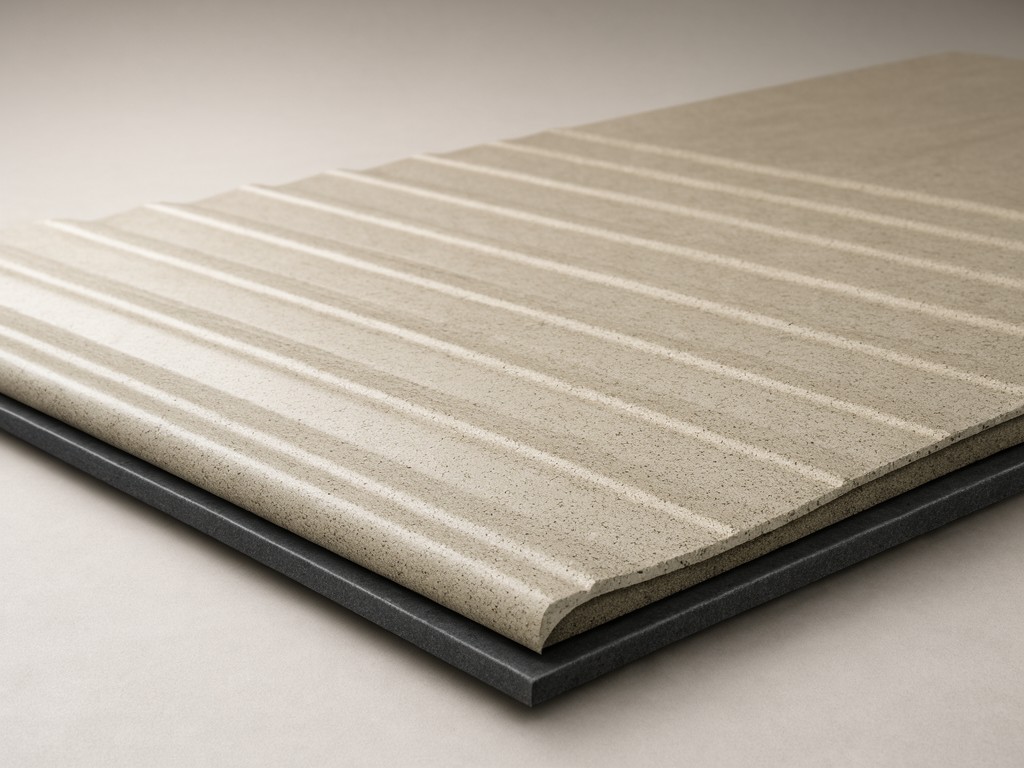
These panels represent a multi-layered sandwich construction where a rigid polyurethane foam is laminated between two pre-finished metal or composite sheets. The assembly is engineered for environments where thermal resistance and moisture barrier properties are required simultaneously. The profile of the outer skin dictates the mechanical load-bearing capacity, while the internal core provides the R-value necessary to maintain internal temperature stability.
| Parameter | Standard Specification | Industrial Grade |
|---|---|---|
| Core Material | Polyurethane (PUR) | Polyisocyanurate (PIR) |
| Thermal Conductivity | 0.022-0.028 W/m·K | Variable by density |
| Cladding Thickness | 0.5mm - 0.7mm | 0.8mm - 1.2mm |
| Joint Integrity | Class B / C | High-tensile reinforced |
Measured Performance in Real Use
First-article tooling determines the precision of the panel joints under wind load. If the profile geometry is not maintained within a tolerance of +/-0.5mm, the interlocking system fails to prevent water ingress under hydrostatic pressure. We test the shear strength of the bond to ensure the skin does not pull away from the foam during rapid thermal cycling.
UV exposure is the primary cause of surface degradation in untreated coatings. A standard PVDF or polyester coating will show chalking within 24 months if exposed to high-altitude radiation without stabilizers. Selecting the correct finish depends on the specific chemical resistance requirements of the site, such as salt spray in coastal regions.
Assumptions Buyers Should Stop Making
- Assuming thicker foam always equates to better insulation; core density is the more critical factor for R-value stability.
- Believing "waterproof" means the panel is impermeable; the joints are the primary points of failure and require site-specific flashing.
- Treating all PUR foam as identical; PIR-based cores offer significantly higher fire resistance and thermal stability.
What Can Be Customised and What Cannot
Customizable Elements
- Profile geometry (Trapezoidal, Flat, Ribbed)
- Coating color specifications (RAL libraries)
- Core thickness (30mm to 200mm+)
- Foil vs. metal tensile strength
Fixed Constraints
- Standard chemical reaction limits
- Minimum structural span safety limits
- Base thermal expansion coefficients of metal skins
- Standard production extrusion line widths
Segment-Specific Requirements
Cold storage facilities require panels with high-density cores to prevent brittleness at sub-zero temperatures. Conversely, commercial retail centers prioritize light-reflectance coatings to reduce cooling-load costs. The procurement officer must match the panel's thermal rating to the specific temperature gradient of the building environment.
Inspection Items and Test Methods
| Test Method | Acceptance Criteria |
|---|---|
| Pull-off Test | Minimum 1.5 N/mm bond strength |
| Dimensional Stability | +/- 1mm over total length |
| Water Absorption | No weight gain after 24h immersion |
Ordering, Tooling and Lead-Time Questions
Lead times are primarily driven by the complexity of the profile tooling. New profile designs require a 4-6 week window for die manufacturing and stress testing before mass production begins. Standard profiles can be fulfilled within 14 days depending on raw material inventory availability for the galvanized steel coils.
What is the minimum order quantity for custom RAL colors?
Typically 1,000 square meters is required to offset the setup cost of the coating line on the continuous press.
Can the core density be varied per order?
Yes, we can adjust the foam blowing agent, but this requires a separate calibration of the production line to ensure consistency.
margin-bottom: 0;">How are the panels protected for international export?
Panels are bundled in moisture-wrapped crates with internal timber spacers to prevent edge damage and deformation during sea transit.
Discuss your project specifications with our engineering team



