top quality 50mm cold room sandwich panels factory - Bulk Supply and Specification Guide
What This Product Is and Where It Fits
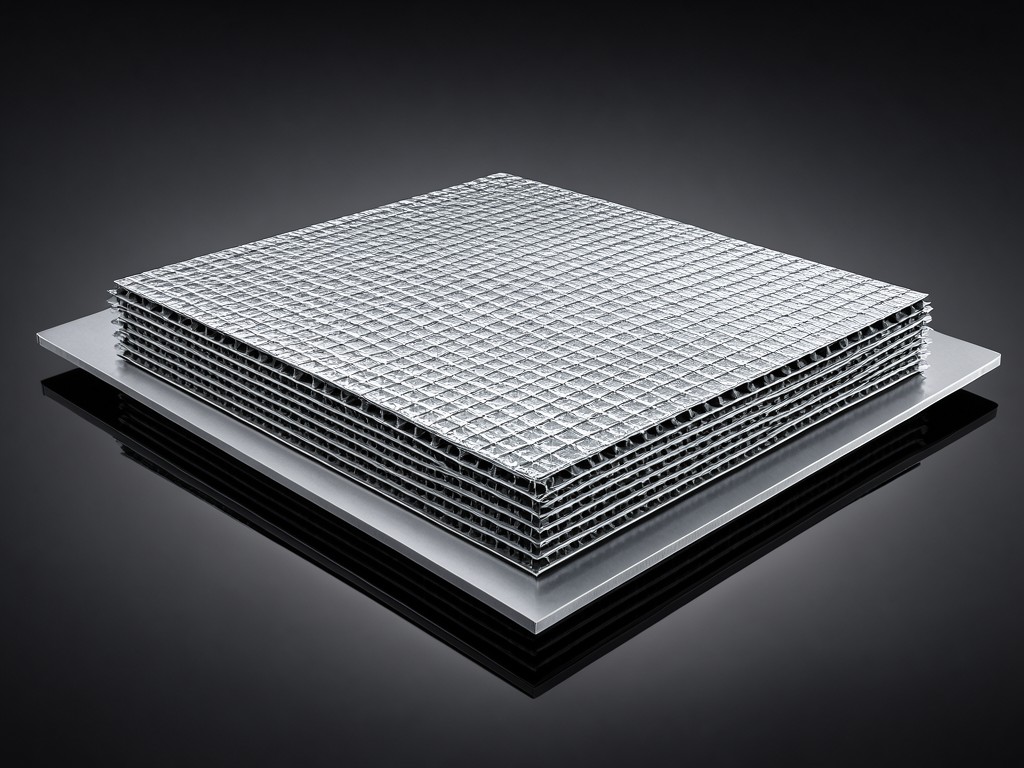
Total cost of ownership shifts once returns are counted. A 50 mm sandwich panel for cold rooms consists of two metal facings bonded to a rigid insulating core, typically polyurethane (PUR) or polyisocyanurate (PIR). The 50 mm thickness targets walk-in freezers, blast chillers, and pharmaceutical storage where the temperature differential across the panel can exceed 40 °C. Buyers specify these panels when they need a complete envelope — walls, ceilings, and sometimes floors — that meets a declared U-value without on-site foam injection.
The factory ships panels cut to length, with tongue-and-groove or cam-lock joints, and often pre-punched for services. The real value is in the joint geometry and the consistency of the foam-to-metal bond; a 0.2 mm gap at the joint can raise the effective U-value by 15 % and create condensation trails that damage stored product.
Assumptions Buyers Should Stop Making
Cheaper stock options fail at the worst point in the season. Many purchasers assume that all 50 mm panels with the same declared density perform identically. In practice, the blowing agent distribution, the facing adhesion method, and the joint profile dictate whether the panel holds its thermal resistance after 2 years of daily door cycles.
- Assuming a single density figure (e.g., 40 kg/m³) guarantees uniform cell structure — it does not; skin thickness varies across the panel width.
- Treating the joint as a thermal break — standard cam-locks leave a 2–3 mm metal bridge unless a thermal break strip is specified.
- Expecting the same fire rating from PUR and PIR cores — PIR chars slower, but the facing material and adhesive also contribute to the Euroclass result.
Specification rule: if the project requires a declared U-value ≤ 0.22 W/(m²·K) at 50 mm, the core must be PIR with a closed-cell content ≥ 95 % and the joint must incorporate a factory-fitted thermal break strip. PUR cores typically need 60 mm to hit that number.
Who Uses It and Where It Matters
The primary buyers are cold-store contractors, food-processing plant engineers, and pharmaceutical logistics operators. They specify 50 mm panels for:
- Walk-in freezers at -25 °C where floor panels carry pallet jack loads of 2.5 t/m².
- Blast chillers that cycle from +90 °C to -40 °C in 90 minutes — the facing must resist thermal shock without delamination.
- Cleanroom ceilings where the panel face acts as the final hygiene surface; any pinhole in the coating becomes a bacterial trap.
In each case the panel is not just insulation — it is structural sheathing, vapour barrier, and interior finish in one piece. A joint failure means condensation, ice build-up, and eventually a complete room rebuild.
Segment-Specific Requirements
Tooling amortisation decides which joint profile the factory can offer at a given MOQ. The selection flow below maps the buyer's service conditions to the construction choices that keep the room performing for 15 years.
- Determine the design temperature differential (ΔT).
- ΔT ≤ 35 °C → standard PUR core, single-skin 0.5 mm steel, cam-lock joint.
- ΔT 35–50 °C → PIR core, double-skin 0.6 mm steel, thermal-break cam-lock.
- ΔT > 50 °C → PIR core, 0.7 mm steel with polyester coating, tongue-and-groove with integrated PVC thermal break.
- Assess mechanical load on the panel face.
- Light duty (personnel only) → 0.5 mm facing, no additional reinforcement.
- Medium duty (hand pallet trucks) → 0.6 mm facing, hat-profile stiffener every 600 mm.
- Heavy duty (forklift traffic) → 0.7 mm facing, C-channel stiffeners at 400 mm centres, core density ≥ 42 kg/m³.
- Define hygiene and fire requirements.
- Standard food storage → polyester coating, Euroclass B-s2,d0.
- High-care / cleanroom → PVC plastisol 150 µm, antimicrobial additive, Euroclass B-s1,d0.
- Pharma / chemical → stainless steel 304 facing, PIR core, Euroclass A2-s1,d0.
How Consistency Is Held Across Batches
The factory runs a continuous double-belt laminator. Consistency hinges on three controlled parameters: foam pour rate (±2 %), belt temperature (±1 °C), and facing tension (±5 N/mm). Each batch of 500 m² is traced to a single polyol lot and a single steel coil. The adhesive application is gravimetric, not volumetric, so the bond line stays at 0.15 mm ±0.02 mm. A shift in any parameter triggers a hold until the first-off panel passes the full test suite.
| Parameter | Control Method | Acceptance Window | Batch Traceability |
|---|---|---|---|
| Core density | In-line gamma densitometer | 40–42 kg/m³ (PUR), 42–44 kg/m³ (PIR) | Polyol lot + ISO timestamp |
| Facing adhesion | Peel test per EN 14509 | ≥ 0.1 MPa, no cohesive foam failure | Steel coil ID + adhesive batch |
| Dimensional tolerance | Laser scan at cut station | Length ±2 mm, thickness ±1 mm, squareness ≤ 1 mm/m | Cut order number |
| Thermal conductivity (λ) | Guarded hot plate (sampled) | ≤ 0.022 W/(m·K) (PIR), ≤ 0.024 W/(m·K) (PUR) | Foam batch + test date |
What Gets Checked Before Shipment
Every pallet undergoes a three-stage gate:
- Visual inspection for facing damage, coating holidays, and joint profile deformation.
- Dimensional check on a statistical sample (AQL 1.5, level II) — length, width, thickness, cam-lock engagement depth.
- Thermal imaging of the joint area at 20 °C ΔT to detect bridging; any panel showing > 0.5 °C anomaly is quarantined.
Fire performance is verified by retaining a 300 mm × 300 mm witness sample from each foam batch for the project's certification file. The factory does not rely on generic material certificates; the witness sample is tested if the project authority requests it.
Export Packaging and Handling Protection
Panels are stacked flat on timber bearers at 600 mm centres, interleaved with 2 mm polyethylene foam to prevent facing abrasion. The stack is wrapped in UV-stabilised stretch film (23 µm) and edge-protected with 3 mm corrugated cardboard. A 40‑ft high-cube container takes 28 m² of 1.2 m wide panels at 50 mm thickness. Each container receives a humidity indicator card and a shockwatch label set to 5 g. The packing list includes the panel ID, core type, facing specification, and the batch traceability code for every panel in the load.
| Usage Level | Core / Facing | Joint System | Typical Project |
|---|---|---|---|
| Light commercial | PUR / 0.5 mm polyester steel | Cam-lock, no thermal break | Small walk-in chillers, ΔT ≤ 30 °C |
| Standard industrial | PIR / 0.6 mm polyester steel | Thermal-break cam-lock | Food distribution freezers, ΔT 35–45 °C |
| High-performance | PIR / 0.7 mm PVC plastisol | Tongue-and-groove with PVC break | Blast freezers, pharma, ΔT > 50 °C |
| Extreme duty | PIR / 0.7 mm stainless 304 | Tongue-and-groove, stainless lock | Chemical storage, cleanrooms, fire-rated |
Setup, Use and Replacement Parts
Installation crews should use a laser level to set the first panel; a 2 mm plumb error at the base compounds to 15 mm at 3 m height and leaks air. Joints are sealed with a gun-applied, low-modulus silicone (neutral cure) on the warm side only — sealing both sides traps moisture in the joint. Replacement panels are cut from the same batch if the original order is within 12 months; beyond that, the factory matches the core λ-value and facing colour within ΔE ≤ 1.0. Spare cam-locks, thermal-break strips, and touch-up paint are shipped in a dedicated accessories crate at 2 % of the panel quantity.
Maintenance is limited to annual joint inspection: check silicone integrity, tighten cam-locks to 8 Nm, and verify that the thermal-break strip has not compressed more than 0.5 mm. Any panel showing facing corrosion at the cut edge must be replaced — the zinc layer is sacrificial and once breached, the core wicks water.
Request a Quotation Review
Send your project drawings, temperature specs, and load cases to the engineering team. They will return a marked-up panel schedule with core/facing options, joint details, and a batch-specific U-value calculation within two business days.



