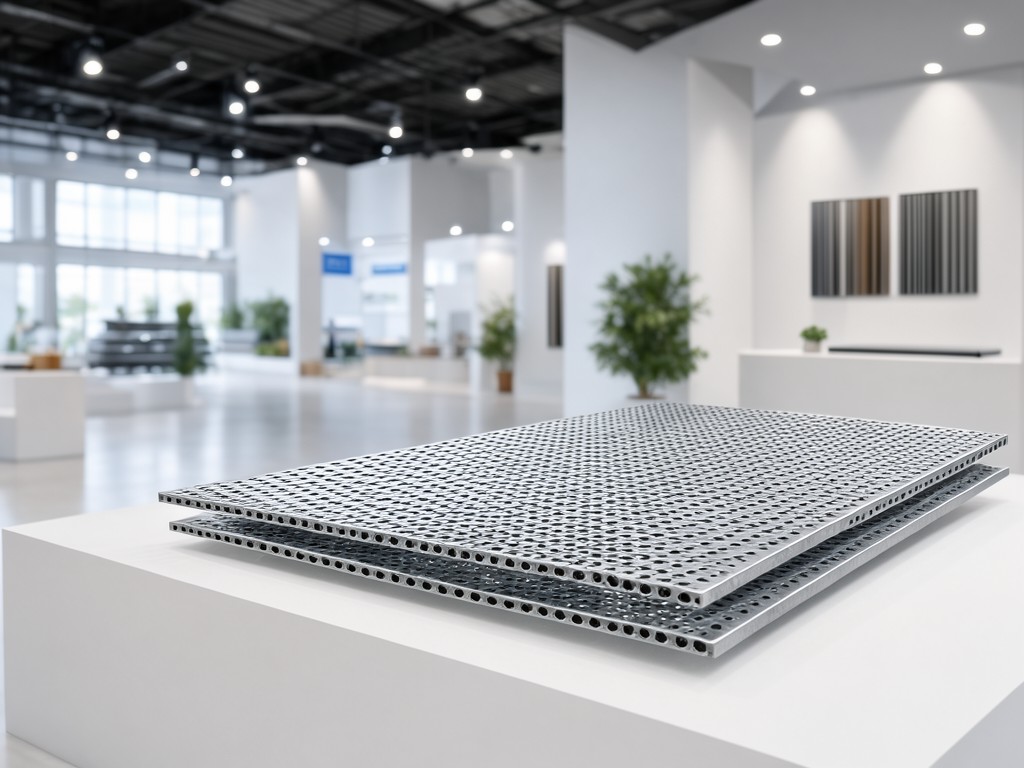
Top Quality Acoustic Perforated Metal Sandwich Panels Supplier: Specification, Ordering and Quality
Acoustic performance depends on the precise interaction between the perforated face and the internal core material. In high-decibel environments, the ratio of perforation area to cavity depth determines the sound absorption coefficient across specific frequencies. Unlike single-layer sheets, the sandwich construction provides structural rigidity that prevents panel deflection over large spans, maintaining a consistent air gap that would otherwise degrade acoustic damping over time.
Structural integrity is maintained through mechanical bonding or adhesive layers that resist delamination under thermal expansion cycles.
Scope of Supply and Physical Form
Material Configurations
The skin material typically varies between galvanized steel and aluminum alloys depending on the required weight-to-strength ratio. The core—often mineral wool, high-density foam, or honeycomb—dictates the thermal resistance and the acoustic NRC rating.
- Perforation diameters ranging from 0.5mm to 5.0mm to tune specific frequency absorption.
- Core thicknesses from 25mm to 150mm based on load-bearing requirements.
- Surface finishes including PVDF, polyester, or architectural powder coating for corrosion resistance.
Installation Constraints
Panel dimensions are limited by transport logistics and site-handling equipment. Large-format panels require specialized fastening systems to avoid visible sagging which can compromise the flat acoustic plane of the installed surface.
What the Design Has to
The perforation pattern is the critical variable in both aesthetic appeal and acoustic efficiency. If the open area is too high, the structural stiffness of the metal skin decreases, leading to oil under vibration. Conversely, a low open area limits the penetration of sound waves into the core, rendering the acoustic material ineffective.
| Parameter | Standard Range |
|---|---|
| Open Area Percentage | 10% - 45% |
| Skin Thickness | 0.5mm - 3.0mm |
| Total Panel Width | 600mm - 1500mm |
| Sound Absorption Rating | Class A or Class B NRC possible |
What Actually Determines
Thermal expansion is the primary cause of seam failure in large-scale sandwich panel installations. In environments with high temperature fluctuations, the different coefficients of expansion between the metal skin and the core can cause shear stress. We utilize high-bond adhesives with sufficient elasticity to ensure the panel face remains monolithic throughout the life of the installation.
Segment-Specific Requirements
- Industrial Infrastructure: Requires high-density cores and mineral-resistant galvanized skins to prevent corrosion in moisture-heavy environments.
- Commercial Interiors: Focuses on fire rating (Class A smoke) and aesthetic perforation consistency for open-plan offices.
- Exterior Facades: Demands UV-stable coatings and watertight joints to prevent core ingress and internal degradation.
Quality Control
Consistency in the perforation pattern is verified via laser-guided inspection. Deviations in hole diameter or pitch can create localized "hot spots" where sound absorption is uneven. We also perform pull-off testing on the core-skin bond for every batch to ensure the adhesive strength meets the specified shear requirements.
Inspection Items and Test Methods
Testing protocol includes salt spray tests to evaluate the longevity of the protective coatings in coastal environments. Structural performance is measured through load-deflection tests, ensuring the panels do not sag under their own weight after long-term exposure to dead loads.
Questions Ask Before Ordering
What is the minimum open area for a specific NRC?
The minimum open area is determined by the target frequency absorption; lower frequencies usually require a higher open area to allow sound waves to reach the core.
Can the perforation pattern be customized for architectural branding?
Yes, CNC punching allows for bespoke geometric patterns, provided the structural integrity of the metal skin is maintained within safety limits.



