top quality insulated wall panels for cold storage suppliers: Specification, Ordering and Quality Notes
Core density, skin thickness and joint geometry drive the three numbers buyers actually track: installed R-value per inch, structural span without secondary steel, and vapor seal integrity after five years of thermal cycling. Thicker foam does not automatically improve the first two if the lock profile leaks or the metal creeps under load.
What This Product Is and Where It Fits
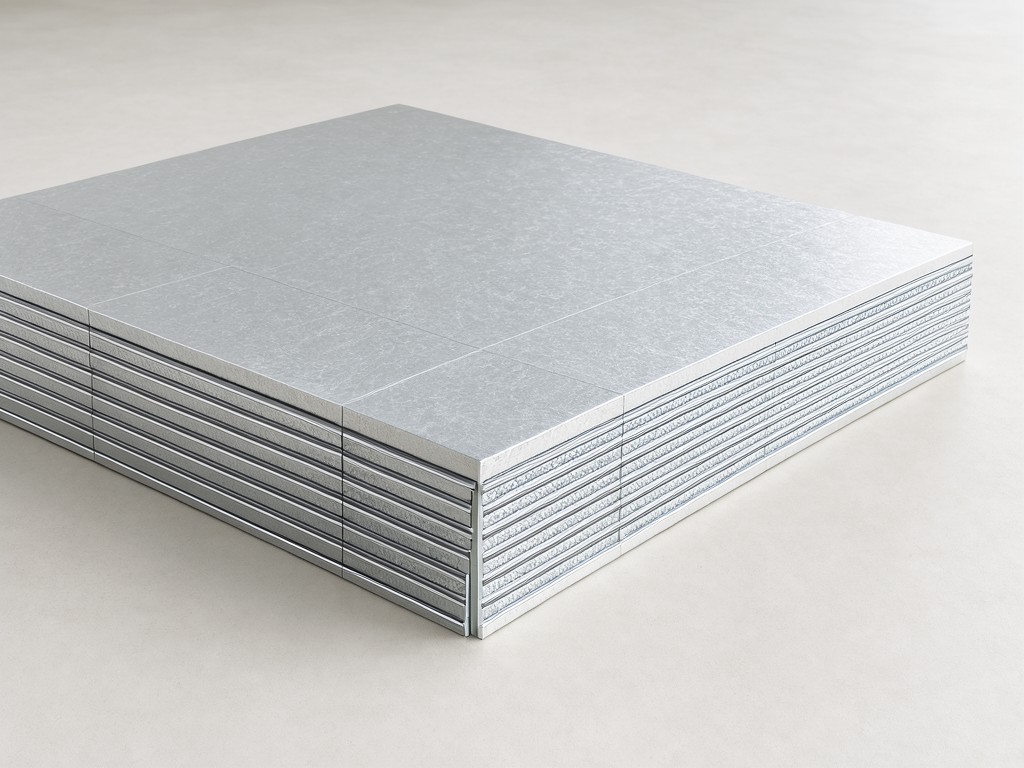
Insulated metal panels for cold storage arrive as factory-finished sandwich components: two metal skins bonded to a rigid foam core under controlled pressure and heat. They replace stick-built assemblies of steel framing, batt insulation, vapor barrier and interior liner panel. The single-piece system cuts field labor by 60 to 70 percent and eliminates the thermal bridges that form at every stud and fastener in conventional construction.
Buyers specify these panels for holding freezers at -30 °C, blast freezers at -40 °C, and coolers at +2 °C. The same panel line serves food processing plants, distribution warehouses, pharmaceutical cold chains and data-center white spaces where dew-point control is non-negotiable.
Where Cheaper Alternatives Fall Short
Low-bid panels typically cut cost in three places: foam density drops from 40 kg/m³ to 32 kg/m³, skin gauge moves from 0.6 mm to 0.45 mm, and the joint profile shifts from a double-tongue labyrinth to a single offset. The result shows up first at the corners — foam pulls away from the skin during the first deep freeze, creating a vapor path that ices up and degrades R-value by 15 to 25 percent within two seasons.
Thinner skins deflect under positive pressure in blast cells, popping the foam-to-metal bond. We see this on forensic cuts where the adhesive line remains intact but the metal has yielded 2 to 3 mm, enough to break the vapor seal. Replacing a 200 m² wall panel bay costs eight times the per-square-meter premium of the heavier gauge.
Material Options and Their Trade-offs
Polyurethane (PUR) cores deliver the highest R-value per inch — typically R-7.5 to R-8.0 at 25 mm — but char at 200 °C and release dense smoke. Polyisocyanurate (PIR) sacrifices 0.3 to 0.5 R-value per inch for a char layer that self-extinguishes and meets FM 4880 Class 1 without added fire retardants. Mineral wool cores drop to R-4.0 per inch but withstand 1000 °C and are mandatory where insurance underwriters require non-combustible construction.
Skin choices follow the same logic. Standard G90 galvanized steel suits dry coolers. Galvalume AZ150 adds 20 percent corrosion life in ammonia refrigeration environments. Stainless 304 2B finish is specified for wash-down zones in meat and dairy plants where chlorine sanitizer cycles attack zinc coatings in 18 months. Aluminum 0.7 mm skins reduce dead load 35 percent for retrofit over existing structure but dent at 40 J impact — forklift traffic zones need steel.
Size, Weight and Specification Range
| Parameter | Standard Range | Customization Window |
|---|---|---|
| Core thickness | 50, 75, 100, 150, 200 mm | 25 mm increments to 300 mm |
| Module width | 1000, 1150, 1200 mm | 900–1250 mm in 50 mm steps |
| Length | 2.4–12 m ex-factory | Up to 16 m with splice joint |
| Skin gauge (ext/int) | 0.5 / 0.5 mm, 0.6 / 0.6 mm | 0.45–1.0 mm per face |
| Foam density | 40 kg/m³ (PUR/PIR) | 36–48 kg/m³ on request |
| Joint type | Double-tongue labyrinth with butyl tape groove | Cam-lock, offset single-tongue, reveal joint |
Weight runs 11–18 kg/m² depending on core and skin combination. A 150 mm PIR panel with 0.6 mm skins averages 14.2 kg/m² — light enough for single-crane erection but stiff enough to span 6 m between girts at 1.2 kPa design pressure.
Who Uses It and Where It Matters
Regional cold-storage developers building 5,000-pallet facilities specify 150 mm PIR with Galvalume skins and FM-approved joints. Their schedule demands 1,200 m² per week installation rate — only achievable with 12 m panels pre-cut to column grid. The double-tongue joint tolerates 3 mm field misalignment without tape replacement.
Pharmaceutical distributors validating GDP compliance need documented lot traceability from foam batch to panel serial number. We stamp each panel with a QR code linking to the foam pour record, skin coil certificate and press cycle log. Auditors scan the wall, not a paperwork binder.
Retrofit contractors inserting a -25 °C room inside an ambient warehouse choose 100 mm PUR with 0.5 mm aluminum liners to keep added dead load under 12 kg/m². The reveal joint hides the transition flashing and avoids thermal bridging at the existing column line.
Requirements by Buyer Segment
| Buyer Segment | Critical Spec | Typical Compromise | Reorder Trigger |
|---|---|---|---|
| Cold-storage developer | FM 4880 Class 1, 6 m span, 12 m length | Accept 150 mm PIR over 200 mm PUR for fire rating | Phase 2 build-out matches Phase 1 lot |
| Food processor (wash-down) | 304 2B stainless interior, sealed joints | 0.7 mm stainless over 1.0 mm to save weight | Panel damage from forklift impact |
| Pharma / GDP facility | Lot traceability, ±2 mm flatness, vapor perm <0.5 ng/Pa·s·m² | Standard joint tape instead of liquid-applied seal | Validation protocol requires identical lot |
| Retrofit contractor | Low dead load, reveal joint, fast delivery | 100 mm PUR instead of 150 mm PIR | Change order adds 200 m² mid-project |
How Consistency Is Held Across Batches
Foam pour weight is monitored per panel by load cell on the dispensing head. Target density ±2 kg/m³ triggers an automatic hold — the panel is cut, cored and density-verified before release. Skin coil thickness is checked at entry with laser micrometer; 0.02 mm deviation from nominal flags the roll for segregation.
Press cycle temperature and dwell time are logged per batch. A 3 °C drop in platen temperature reduces cross-link density enough to raise permeance 12 percent. We run a hot-box test (ASTM C1363) on the first and last panel of every 500 m² run. R-value drift greater than 3 percent stops the line for formulation review.
Dimensional checks: length ±3 mm, width ±2 mm, squareness 1 mm/m, flatness 4 mm over 3 m. Panels outside tolerance are down-sold as non-structural liner — they never ship as prime cold-store grade.
Stock Availability and Reorder Planning
Standard 1000 mm × 150 mm PIR panels in 0.6 mm Galvalume white/white carry 3,000 m² floor stock. Turns in 14 days. Custom skin colors, stainless faces or non-standard widths run 18–22 business days from coil allocation. Foam formulation changes — switching PUR to PIR or adjusting fire-retardant package — add 10 days for lab requalification.
Reorder matching: provide the original lot number from the QR stamp. We pull the same foam batch record, skin coil heat number and press recipe. If the original lot is exhausted, we run a 200 m² pilot batch, test per the original protocol, and ship only after the buyer signs off on the comparison report. This adds 7 days but eliminates the "slightly different white" dispute that delays final inspection.
Ready to Specify?
Send us the project temperature, span, fire rating and skin requirement. We return a marked-up panel schedule with joint details, fastener pattern and lot-traceability format within 24 hours.
Start a project discussion


