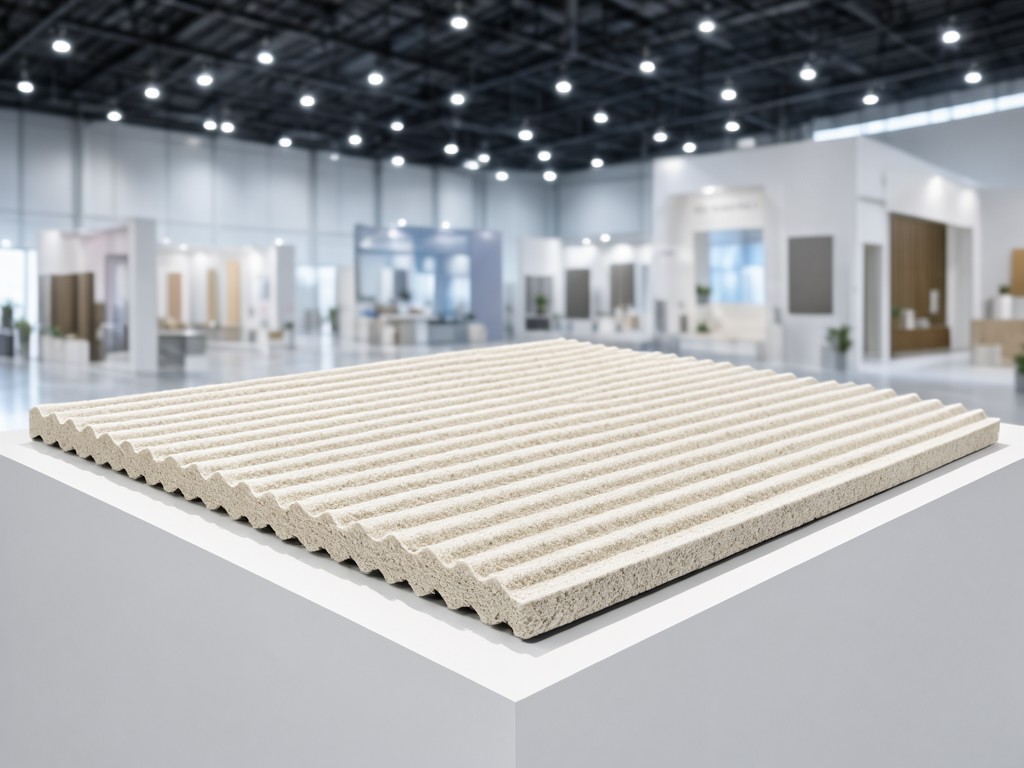
top quality rockwool core corrugated roof panel factory - Bulk Supply and Specification Guide
Most quality disputes start with a consistency gap between the specified core density and the actual thermal resistance performance. When the rockwool density fluctuates across batches, the structural rigidity of the corrugated profile shifts, leading to localized deformation under snow or wind loads. Procurement officers must demand specific density ranges—typically 80kg/m³ to 120kg/m³—to ensure the thermal profile remains stable over the life of the roofing system.
Assumptions Buyers Should Stop Making
Buyers often assume that a thicker steel skin automatically translates to better fire ratings. In reality, the fire performance of a rockwool panel is dictated by the mineral wool's melting point and the mechanical retention of the corrugated profile. If the core is not properly constrained, the panel may fail to maintain its structural integrity regardless of the skin gauge.
Another common misconception is that all rockwool cores are interchangeable for acoustic insulation. The geometry of the corrugation and the porosity of the fibers determine the sound absorption coefficient. For industrial applications requiring high decibel reduction, a lower-density core with specific fiber orientation is required compared to standard high-density thermal barriers.
What Can Be Customised and What Cannot
Customization is primarily limited to the profile geometry and the surface coating of the steel sheets. We can adjust the rib height and pitch of the corrugation to meet specific span load-bearing requirements. However, the fundamental chemical properties of the rockwool core are fixed once the thermal manufacturing process is set.
- Surface finishes: Available in PVDF, polyester, or plastisol coatings based on environmental exposure levels.
- Core thickness: Adjustable from 50mm to 250mm depending on U-value targets.
- Skin gauge: Options ranging from 0.5mm to 1.0mm for varying structural span needs.
Usage Scenarios and Buyer Segments
Industrial logistics hubs prioritize rapid installation and fire-resistant materials to meet safety codes. In these environments, the focus is on the load-to-weight ratio of the corrugated profile. Conversely, commercial retail-space centers focus on the aesthetic finish consistency and thermal performance to reduce operational costs.
| Usage Condition | Typical Failure | Prevention Specification |
|---|---|---|
| High Thermal Cycling | Core-to-skin delamination | High-shear strength adhesive certification |
| Corrosive Environment | Edge corrosion at cut sites | Class C/D salt spray resistant coating |
| Heavy Snow Load | Profile buckling | Increased rib height and core density |
Requirements by Buyer Segment
Private-Label Manufacturers
Private-label buyers require strict color matching across different production runs to ensure brand consistency. If the coating batch-tolerance deviates beyond the allowable Delta E, the entire shipment may be rejected for large-scale architectural projects.
Academy Purchasing Managers
For large-scale institutional projects, the priority is the fire-rating certification and acoustic damping. Panels must provide consistent load-bearing capacity to allow for longer spans without intermediate structural reinforcement, reducing labor costs during installation.
Stock Availability and Reorder Planning
Stock availability is dictated by the lead time for raw rockwool production and steel coil processing. Standard profile widths are typically maintained for immediate dispatch, but custom corrugation patterns require a 4-6 week tooling lead time. Reorders should be planned based on project milestones rather than reactive needs to avoid exposure to raw material price fluctuations.
Ordering, Tooling and Lead-Time Questions
- What is the minimum order quantity for a bespoke corrugated profile?
- How does the tooling cost amortize over orders exceeding 5,000 square meters?
- What is the lead time for high-density rockwool core reinforcement?
Need to discuss specific technical parameters for your next project?
Request a technical tooling and specification review


