Specifying Wholesale Embossed Aluminum Cold Room Sandwich Panels Suppliers for Wholesale and Orders
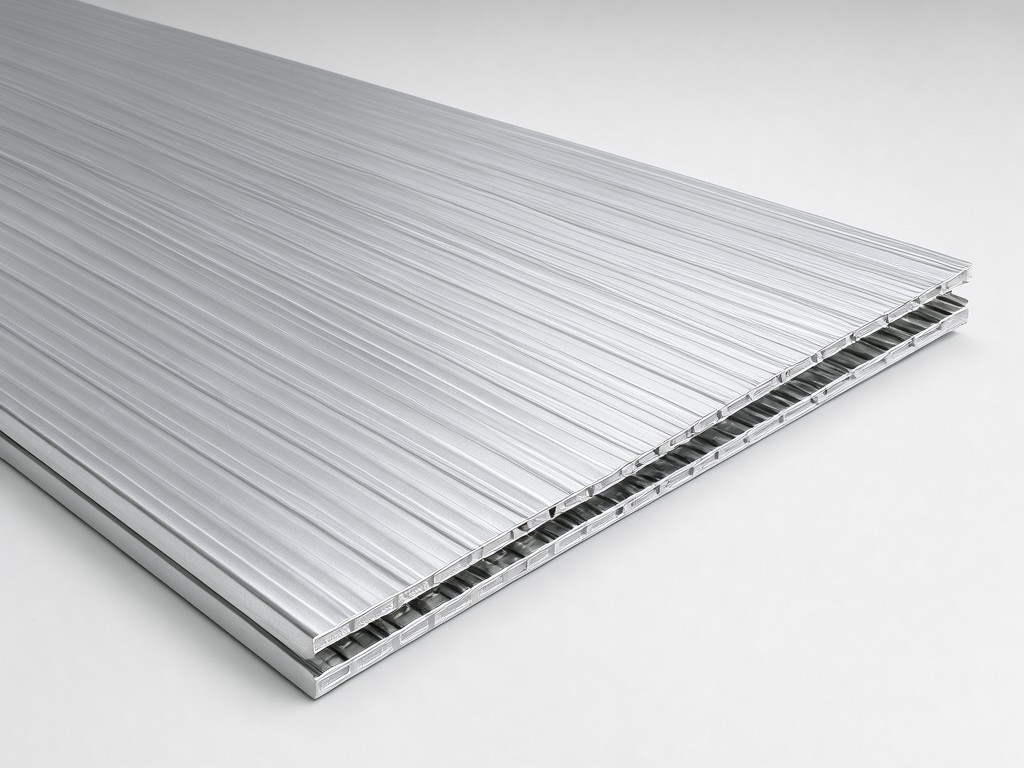
Thermal efficiency in cold storage depends on the mechanical bond between the structural skin and the insulating core. Embossed aluminum surfaces provide a textured profile that increases the surface area for adhesive bonding, preventing delamination in high-humidity environments where rapid temperature fluctuations occur. Procurement officers must balance the R-value of the foam core against the skin thickness to ensure structural integrity under thermal stress.
Materials and Construction Trade-offs
| Parameter | Specification Range | Performance Impact |
|---|---|---|
| Skin Thickness | 0.5mm - 1.5mm | Load bearing capacity and impact resistance |
| Core Material | PUR / PIR / Mineral Wool | Thermal conductivity and fire safety rating |
| Panel Width | 50mm - 200mm | Insulation value (U-value) efficiency |
PIR cores offer superior thermal resistance per mm compared to standard PUR but increase the material cost per unit. For deep-freeze applications, mineral wool cores provide the necessary fire stability despite the higher weight which affects logistics costs. The embossed finish ensures that the aluminum skin remains bonded to the core even when the panel undergoes significant shear stress during transport or installation.
Size, Weight and Specification Range
Standard panel lengths are dictated by transport constraints, typically optimized for high-cube container dimensions. Orders exceeding 12 meters often require specialized flat-bed logistics, increasing the freight overhead significantly. Weight per square meter is a critical metric for structural engineers, as it determines the dead load requirements for the cold room framework.
Profile Options
- Micro-profile embossing for aesthetic-focused retail cold rooms.
- Heavy-duty deep embossing for maximum mechanical grip in industrial joints.
- Flat-face interlocking systems for rapid-assembly modules.
Joint Systems
- Tongue and groove with thermal-break poly-inserts.
- Cam-lock hidden mechanisms for high-pressure wall applications.
- Cap-profile joints for floor-to-wall transitions.
Assumptions Buyers Should Stop
Buyers often assume that thicker panels automatically translate to better thermal performance without verifying the density of the foam. A low-density core may fail to support the aluminum skin under the weight of long-span ceilings, leading to visible sagging and air leaks at the joint lines. The aluminum alloy also must be specified for corrosion resistance if the facility uses aggressive cleaning agents or operates in saline environments.
Inspection Items and Test Methods
Quality control involves batch-specific testing to ensure the adhesive bond meets the minimum shear strength. We perform pull-off tests to verify that the skin does not delaminate from the core under load. Salt spray tests are conducted on the aluminum skins to validate the coating's resistance to oxidation in moisture-heavy environments.
Keeping Repeat Orders
Tooling amortisation is the primary driver for price variance in custom profile orders. High-volume repeat orders reduce the fixed cost of specialized extrusion dies, allowing for more competitive pricing per square meter. Consistency across batches is maintained through automated production monitoring, ensuring that panels fit perfectly in multi-phase site expansions.
Export Packaging and Handling
Panels are wrapped in protective film to prevent abrasion of the embossed surface during transit. We utilize reinforced steel crates with internal bracing to prevent warping of the panels during long-sea shipping. Each shipment is tagged with traceability data detailing the batch number and the core density used during production.



