wholesale exterior roof insulation panels china supplier: What Buyers Should Check Before Ordering
Total cost of ownership shifts once returns are counted, because a panel that fails in the field triggers replacement labor and warranty claims that dwarf the initial price gap.
Tooling amortisation decides the unit cost at volume; a mold that runs 10,000 pieces spreads its expense far thinner than a short run of 500, and the per‑panel price reflects that spread.
Scope of Supply and Physical Form
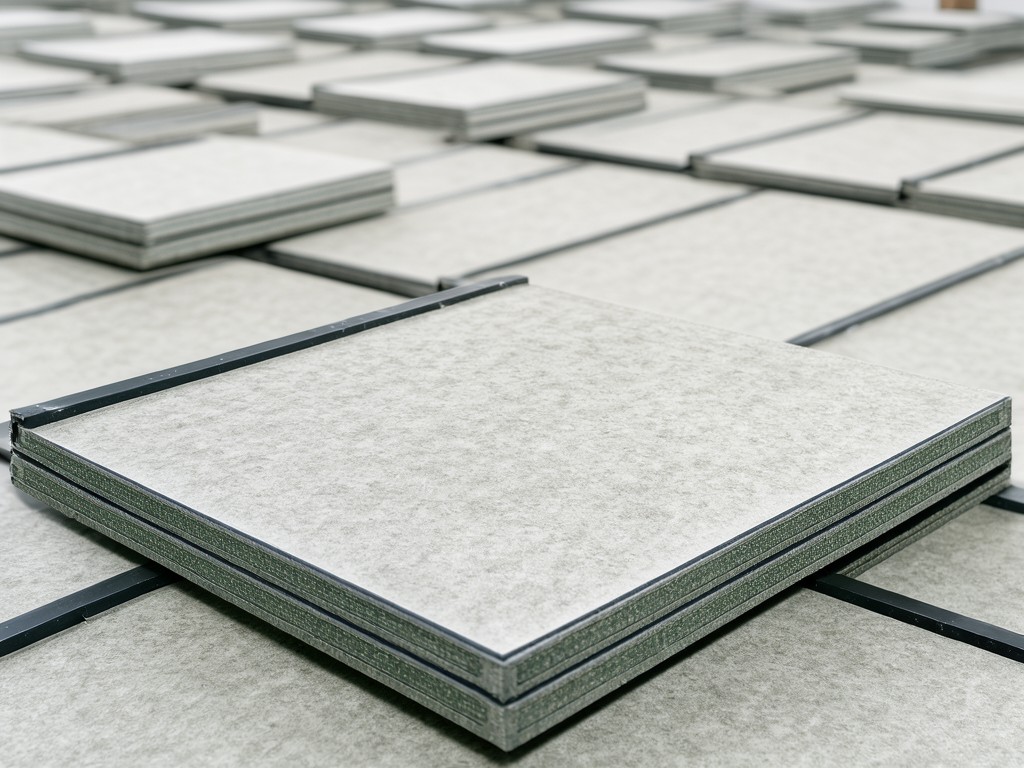
The supply scope covers rigid board, sandwich panel, and spray‑applied systems, each shipped in flat‑pack or crated format depending on thickness.
- Rigid board – 30 mm to 150 mm thick, faced with coated steel or aluminum
- Sandwich panel – two metal skins bonded to a foam core, standard 1000 mm width
- Spray‑applied – liquid‑applied foam that cures in place, suited for complex geometries
Measured Performance in Real Use
Field data shows that thermal resistance, compressive strength, and fire classification drive repeat orders more than any marketing claim.
A 50 mm EPS core delivers an R‑value of 1.4 m²·K/W, while a 50 mm XPS core reaches 1.7 m²·K/W; the difference appears in heating‑load calculations for the same roof area.
| Parameter | EPS Core (50 mm) | XPS Core (50 mm) |
|---|---|---|
| Thermal Resistance (R‑value, m²·K/W) | 1.4 | 1.7 |
| Compressive Strength (kPa) | 120 | 250 |
| Water Absorption (% vol) | 2.5 | 0.5 |
| Fire Rating (EN 13501) | Class E | Class B |
Size, Weight and Specification Range
Panel dimensions follow a 1000 mm width module; lengths run from 2000 mm to 6000 mm in 500 mm steps, and weight per square metre ranges from 3.2 kg for 30 mm EPS to 9.8 kg for 150 mm XPS.
| Panel Size (mm) | Panels per Pallet | Pallet Weight (kg) | 40‑ft Container Load (pallets) |
|---|---|---|---|
| 1000 × 2000 × 50 | 30 | 960 | 22 |
| 1000 × 3000 × 80 | 20 | 1120 | 18 |
| 1000 × 6000 × 120 | 12 | 1400 | 14 |
Comparing Two Standard Configurations
Two configurations dominate the catalog: a standard EPS board aimed at cost‑sensitive projects and a high‑density XPS board specified for load‑bearing roofs.
Standard EPS Configuration
Core density 15 kg/m³, faced with 0.5 mm pre‑painted steel; suitable for spans up to 3 m without additional purlins.
High‑Density XPS Configuration
Core density 35 kg/m³, faced with 0.7 mm aluminum; supports spans up to 5 m and meets Class B fire rating without extra treatment.
How to Choose Before Requesting a Quote
Start by fixing the required R‑value for the climate zone, then match the core thickness that meets it without oversizing.
Verify that the declared R‑value matches the tested thickness; a 10 mm variance changes the rating by 0.15 m²·K/W.
Confirm the fire rating required by local code; the difference between Class B and Class A can add two weeks to lead time because of additional testing.
Ready to align a private‑label spec with production reality? Share your target R‑value, panel size, and volume forecast.
Request a tooling review


