wholesale heat resistant glass wool sandwich panels solution: What Buyers Should Check Before Ordering
Where Cheaper Alternatives Fall Short
When panels are specified for continuous 250 °C service, the adhesive line often becomes the first failure point. Lower‑cost cores drop density below 100 kg/m³, causing sag and a measurable rise in thermal conductivity after only a few hundred hours. Thin steel facings under 0.5 mm warp under thermal cycling, and the bond layer delaminates once moisture penetrates the joint.
- Core density drift leads to 15‑20 % loss of R‑value within the first year.
- Facing thickness under 0.5 mm produces visible oil‑canning on 3 m spans.
- Adhesive formulated for 180 °C fails at 250 °C, creating a fire‑spread path.
| Parameter | Standard Range | Typical Failure When Underspecified |
|---|---|---|
| Core density | 120–140 kg/m³ | Thermal drift, sag |
| Facing thickness | 0.5–0.8 mm (steel) / 0.7–1.0 mm (Al) | Oil‑canning, buckling |
| Adhesive service temp | ≥260 °C continuous | Delamination, fire path |
Comparing Two Standard Configurations
Config A – Steel‑faced, 100 mm core
Core density 130 kg/m³, facing 0.6 mm galvanized steel, high‑temp phenolic adhesive.
Thermal conductivity 0.036 W/m·K at 250 °C, fire rating A2‑s1,d0.
Weight ≈ 14 kg/m²; suitable for furnace linings and petrochemical ductwork.
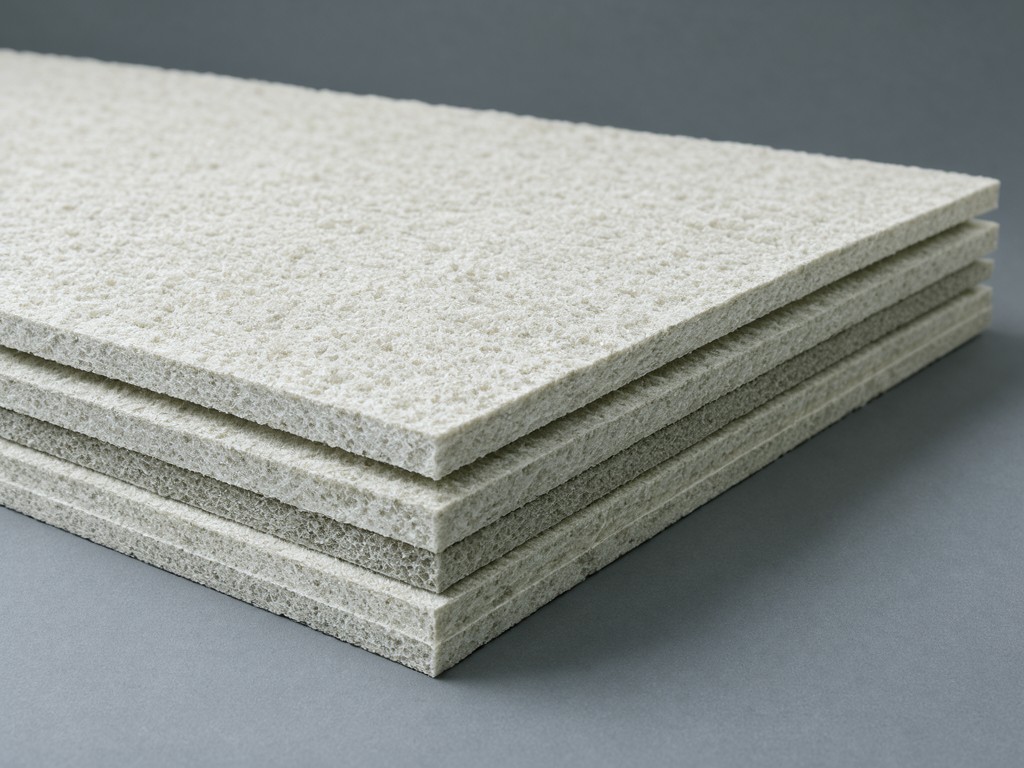
Config B – Aluminum‑faced, 80 mm core
Core density 125 kg/m³, facing 0.8 mm marine‑grade aluminum, silicone‑based adhesive.
Thermal conductivity 0.038 W/m·K at 250 °C, fire rating A2‑s1,d0.
Weight ≈ 11 kg/m²; preferred for offshore modules where corrosion resistance outweighs marginal R‑value loss.
Matching the Product to the Buyer's Need
Critical specification rule
Core density must stay within 120–140 kg/m³ for consistent thermal resistance; any deviation >5 % triggers a mandatory re‑test before shipment.
Private‑label buyers should lock the density window in the purchase agreement and request a density certificate per batch. Wholesale distributors benefit from specifying the adhesive grade (phenolic vs silicone) because it determines the maximum continuous service temperature and the warranty period they can offer downstream.
Who Uses It and Where It Matters
Industrial furnace operators line combustion chambers with Config A to survive 1 200 h cycles at 250 °C without core sag. Petrochemical plants wrap high‑temperature piping in Config B where salt‑spray exposure demands aluminum’s corrosion barrier. HVAC contractors specify the panels for fire‑rated ductwork in commercial towers, relying on the A2‑s1,d0 classification to meet local building codes.
Each segment demands a different balance of weight, fire performance, and corrosion resistance; the configuration choice is driven by the dominant service stress, not by unit price alone.
Export Packaging and Handling Protection
Panels are shipped flat on treated timber pallets, each stack wrapped in VCI film and edge‑protected with 3 mm corrugated corner boards. A moisture‑indicator strip is placed on every pallet; any color change triggers a hold for re‑inspection. Strapping tension is limited to 1.2 kN to avoid facing deformation during sea freight.
Labels include batch number, core density, facing type, and adhesive grade for full traceability from factory to site.
Ordering, Tooling and Lead-Time Questions
What is the minimum order quantity for a custom facing gauge?
Standard MOQ is 500 m² per facing thickness; lower volumes incur a tooling surcharge of US$1 200 for the roll‑forming set‑up.
How long does a first‑article inspection take?
Typically 7‑10 business days after the pilot run, covering density verification, thermal conductivity, and adhesive shear test.
Can we brand the panels with a private label?
Yes, laser‑etched or printed labels are applied on the facing before packaging; artwork must be supplied in vector format at least 14 days before production start.
What is the standard lead time for a repeat order?
Repeat orders of stocked configurations ship within 15 days; custom core density or adhesive adds 10 days for material qualification.
Ready to lock in specifications and review artwork?
Submit your artwork and branding brief


